Cosmic Red Shift
When we gaze at the night sky, it’s like looking back in time. The light from distant galaxies tells stories from billions of years ago, and each tiny shift in color carries a clue about the universe’s history.
One of the most fascinating ways we uncover this cosmic story is through something called red shift, a phenomenon that has guided astronomers for nearly a century.
Red Shift Basics: What It Really Means
Red shift might sound like just a color change, but it’s really about light itself. Light is a type of electromagnetic wave, and it comes in different wavelengths. The light we can see, called visible light, ranges from red (longest wavelength) to blue or violet (shortest wavelength).
When we talk about red shift, we’re describing how the wavelength of light stretches. When an object moves away from us, its light waves stretch, making them appear “redder.” The opposite happens if an object moves closer—its light shifts toward blue.
This change is linked to frequency: as wavelength increases, frequency decreases. This is similar to the Doppler effect we hear in sound. For example, when a car speeds past, its engine noise changes pitch. Light behaves the same way, but we notice it as a color shift.
However, cosmic red shift isn’t just about objects moving fast. It’s closely tied to the expansion of space itself, which makes the story even more fascinating.
The Discovery That Changed Everything
In the early 20th century, as astronomers gained access to more advanced telescopes, they began noticing that distant galaxies were red-shifted. Edwin Hubble, an American astronomer, played a key role.
In 1929, Hubble made a groundbreaking discovery: the farther a galaxy is from us, the faster it seems to move away. This wasn’t just about motion—it revealed that the universe itself is expanding.
Before this, most scientists believed the universe was static. Hubble’s observation overturned that idea. Einstein had predicted an expanding or contracting universe through his general relativity theory, but he initially added a “cosmological constant” to keep it static. Hubble’s discovery showed Einstein’s intuition about expansion was correct, something Einstein later called his “greatest blunder.”
Connecting Red Shift and Cosmic Expansion
It’s important to understand that galaxies aren’t racing through space like cars; space itself is stretching. Imagine drawing two parallel lines on a balloon. As the balloon inflates, the lines move apart, and their lengths stretch too. Light traveling through expanding space behaves similarly: its wavelength stretches, producing red shift.
This effect lets astronomers measure distances. Red shift is essentially a cosmic ruler. The more a galaxy’s light is red-shifted, the farther it is from us. And the story doesn’t end there—observations reveal that the universe’s expansion is accelerating, hinting at a mysterious force called dark energy.
Why Red Shift Unlocks Cosmic History
Red shift isn’t just a physical phenomenon—it’s a window into time. By observing red shift, we can look back at the universe’s past and trace its evolution.
- Origin Evidence: The red shift supports the theory that the universe expanded from an extremely hot, dense state. Observing red shift is like seeing the footprint of that expansion.
- Estimating the Universe’s Age: By measuring galaxy red shifts and their distances, scientists can calculate how fast the universe expands. Combined with other observations, like cosmic microwave background radiation, we estimate the universe is about 13.8 billion years old.
- Understanding Structure and Fate: Red shift also informs us about the universe’s future. The accelerating expansion could lead to a “cold death,” where matter disperses and temperatures approach absolute zero. In short, red shift is a memory of the cosmos, letting us peer both backward and forward in time.
Modern Applications in Astronomy
Red shift isn’t just a historical clue; it’s a vital tool for modern research.
- Measuring Distances: Red shift allows us to calculate how far galaxies and other celestial objects are.
- Velocity Tracking: By comparing red shifts, we can understand how galaxies move relative to each other.
- Studying Cosmic Structure: Large-scale red shift surveys reveal galaxy clusters, superclusters, and cosmic voids.
- Exploring Dark Matter and Dark Energy: Red shift provides crucial clues about these mysterious components, which make up most of the universe.
- Investigating Early Galaxies: Observing high red shift objects shows us the universe in its early stages, revealing how galaxies formed and evolved.
Red shift has become the backbone of modern astronomy, unlocking the universe’s secrets in ways that once seemed impossible.
Looking Back Through Light
Every time we look up at the stars, we are glimpsing the history of the cosmos. Red shift allows us to read the universe’s diary, revealing its origin, structure, and potential destiny. It connects us to the vast expanse of space and time, turning observations into stories, data into history.
By studying red shift, we not only measure distances or velocities, but also uncover mysteries like dark energy and the universe’s fate. It’s a bridge between us and the cosmos, letting us witness both the distant past and the unfolding future.
Next time you gaze at the night sky, think of red shift and the incredible journey each photon has traveled to reach your eyes. Through this phenomenon, we are not just observers—we are participants in the universe’s grand story.
How Redshift Revealed the Universe
Video by What The Physics?!
-
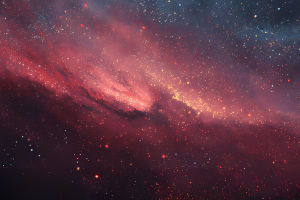 Cosmic Red ShiftWhy Looking at Red Shift Can Reveal the Universe’s Past, Present, and Future in Ways You Never Imagined!
 -
 Sky Rain ShowWhy the Best Meteor Shower Moments Happen After Midnight—Discover the Secrets of Night Sky Magic!
 -
 Moon Protects EarthDiscover How the Moon Silently Shapes Our Oceans, Climate, and Magnetic Shield!
Copyright © zogu 2021 - 2025. All Right Reserved.