Mastering the Cello
Sitting down with a cello for the first time is not like picking up a guitar; it is more akin to docking a small wooden vessel.
You are managing a hollow-bodied specimen that weighs approximately 6 kilograms (about 13 pounds), held in place by a steel spike.
Unlike smaller string instruments, the cello demands a total "structural alignment" between the human frame and the spruce-and-maple architecture. If your posture lacks mechanical integrity, the approximately 150 pounds (≈68 kg) of string tension will win the battle, leaving you with nothing but a strained back and a nasal tone. To transform this wooden box into a resonant extension of your soul, you must follow the technical principles of the masters.
The Three-Point Anchor
Stability is the first "circuit breaker" in cello pedagogy. You cannot produce a clean vibration if the instrument is wobbling. The cello must be anchored at three specific contact points to create a "tripod of stability."
First, extend the endpin (the retractable metal rod) so that the "nut" of the cello—the top of the fingerboard—is approximately level with or slightly below your ear (depending on player height and comfort). The back of the instrument should lean against your chest, specifically the sternum. Second, the lower bouts of the cello must be gripped lightly by your knees, but without applying enough pressure to "choke" the wood's resonance. Finally, the "C-string" tuning peg should be positioned near (not strictly behind) your left ear. This alignment ensures that the specimen remains stable while your arms are free to manage the fluid dynamics of the bow and the fingerboard.
The Bowing Mechanism
The bow is the engine of the cello. It is a high-tension lever made of Pernambuco wood or carbon fiber. Beginners often make the mistake of "squeezing" the bow with their fingers, which kills the sound. Instead, you must use "gravity-assisted" weight.
The Bow Control SOP
- The Frog Grip: Your thumb should be curved against the "frog" (the heavy base) of the bow, acting as a fulcrum. The rest of your fingers should drape over the stick like relaxed, flexible supports.
- The Rosin Application: Before playing, apply a layer of "dark" rosin to the horsehair. Dark rosin is generally stickier than light rosin, providing the necessary friction to move the heavier strings.
- The Sound Point: Draw the bow approximately halfway between the bridge and the fingerboard. If you drift too close to the bridge (sul ponticello), the sound becomes harsh and metallic; too far over the fingerboard (sul tasto), and the volume decreases.
- The Straight Path: The bow must remain as perpendicular as possible to the strings. Any diagonal movement results in unwanted surface noise and a loss of tonal clarity.
Left-Hand Precision
While the right arm generates power, the left hand dictates the "mathematics" of the pitch. Because the cello has no frets, you are working with an "infinite" fingerboard. Precision is a matter of muscle memory and structural geometry.
Your left hand should maintain a "C-shape," as if you are holding a tennis ball. Do not press the strings with the flat pads of your fingers; use the tips. This concentrates the pressure into a smaller surface area, allowing the string to firmly contact the ebony fingerboard with minimal effort. In the first position, your fingers are spaced roughly a few centimeters apart (varies by hand size). If your hand collapses or your wrist "breaks" toward the neck, you lose the mechanical leverage needed to sustain a note. Every finger must act like a controlled, precise unit—quick, firm, and efficient.
Maintenance for Longevity
A cello is a living machine sensitive to environmental conditions. Because it is held together by organic hide glue, extreme heat or low humidity can cause the seams to separate or the wood to become unstable.
The daily maintenance SOP is simple but vital. Always wipe the rosin dust off the spruce top after playing; if left to accumulate, this dust can bond with the varnish and dampen the instrument's vibration. Invest in a hygrometer for your case. If the humidity drops below 40–50% (recommended range), the wood may shrink, and the internal sound post could shift or fall. Keeping the instrument in a stable microclimate is essential to preserve its tone over time.
Resonating with Purpose
The cello is a reminder that the most beautiful things in life require a deep, grounded foundation. It is the only instrument that you must literally "hug" to play. This physical intimacy means that every vibration the cello produces is felt directly in your ribcage.
Reflect on your own foundation: Are you trying to project a soaring melody before you have even anchored your endpin? The cello teaches us that power comes from gravity and relaxation, not from force and tension. True mastery is not about how fast your fingers can move; it is about how effectively you can transfer weight into the strings. Are you ready to stop fighting the instrument and start working with the physics of resonance?
-
 Outdoor Time for BabiesWhy Daily Outdoor Play Boosts Growth, Learning, and Social Skills in Early Childhood
 -
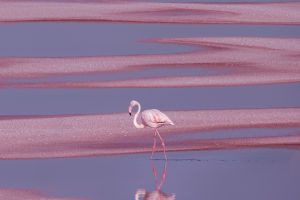 Flamingo ColorThe Science Behind Their Stunning Pink Feathers
 -
 Croatian WaterCroatia's most stunning national park has 16 turquoise lakes connected by waterfalls — and it's worth the crowds.
Copyright © zogu 2021 - 2025. All Right Reserved.