Bear: Hibernating Secrets!
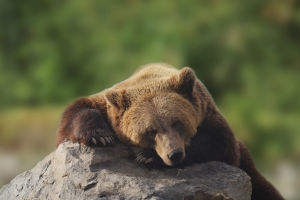
When winter transforms forests into frozen landscapes, the mighty Brown bear withdraws into a sheltered den and enters a state that looks like sleep but functions as a highly controlled survival strategy.
Unlike small mammals that enter deep, near-unconscious torpor, brown bears maintain a careful balance between rest and awareness.
This seasonal retreat is not passive. Beneath snow and soil, a series of precise internal adjustments allows the bear to endure months without eating or drinking. The result is one of the most advanced examples of large-animal adaptation in the natural world. Among many features, three abilities stand out as especially remarkable.
A Metabolic Slowdown Without Full Shutdown
Most hibernating animals sharply reduce their body temperature to extremely low levels. Brown bears take a different approach. Their temperature drops only slightly, yet their metabolic rate slows by up to 70 percent. This controlled reduction allows them to conserve energy while still maintaining responsiveness. If disturbed, a bear can wake quickly and react—something deep hibernators cannot do without a long recovery period.
Rather than shutting systems down entirely, the bear operates in an ultra-efficient mode. Essential functions continue at reduced levels, preventing long-term damage that might otherwise occur during extended inactivity. Researchers are particularly interested in this balance because it shows how a large mammal can reduce energy use without harming critical systems. It provides a rare model for studying metabolic control under extreme conditions.
Sustaining Strength Without Eating or Moving
Before winter arrives, brown bears enter a phase of intense feeding known as hyperphagia. During this time, they accumulate large energy reserves that will sustain them through the colder months. Once inside the den, the bear neither eats nor drinks, and movement becomes minimal. In most animals, such conditions would lead to rapid muscle loss and weakness. Brown bears, however, emerge in spring with their strength largely preserved.
This is possible because their bodies recycle key nutrients. Nitrogen, which plays an essential role in maintaining protein structure, is retained and reused rather than discarded. This internal conservation allows muscle tissue to remain stable even without activity.
At the same time, stored energy is gradually released to fuel vital processes. The balance between conservation and use is tightly regulated, ensuring that the bear has enough energy to last until spring without compromising physical condition. This ability has drawn attention from scientists studying muscle preservation in humans, especially in situations involving long periods of immobility.
A Closed-Loop System That Reuses Waste
One of the most surprising features of brown bear hibernation is its internal recycling system. During months in the den, bears do not expel waste in the usual way. Instead, byproducts are transformed into useful components. Urea, typically eliminated from the body, is broken down and converted into amino acids—the building blocks of protein. This process prevents harmful accumulation while supporting the maintenance of muscle tissue.
Additionally, bears form a compact plug within the digestive tract made of shed cells, hair, and other materials. This structure remains in place throughout hibernation and is expelled only after the bear awakens. It helps maintain stability within the digestive system during prolonged inactivity.
Meanwhile, the heart rate drops significantly, yet circulation remains steady enough to keep tissues healthy. Bears avoid complications that would normally arise in inactive animals, such as clot formation or deterioration of physical condition. This near closed-loop system—where resources are reused and waste is minimized—demonstrates an exceptional level of efficiency rarely seen in large mammals.
Why These Abilities Matter
The hibernation strategy of the Brown bear is more than a seasonal habit. It is a coordinated set of adaptations that allows survival through months of scarcity without lasting harm. Each function supports another, forming a system that is both resilient and precise.
However, this system depends on environmental stability. Shifts in climate and increasing human disturbance can alter hibernation patterns or disrupt denning sites. When these changes occur, even highly adapted species may struggle to maintain their balance.
Understanding these mechanisms is not only vital for conservation but also offers valuable insights into biology. The bear’s ability to endure extended inactivity without damage provides a model that could influence future medical and scientific research.
Hidden beneath winter’s silence, the brown bear is not simply resting—it is performing one of nature’s most refined survival strategies. Every slowed heartbeat and carefully conserved resource reflects a system built for endurance.


Copyright © zogu 2021 - 2025. All Right Reserved.