First Human in Space
Imagine standing on a launch pad, the roar of engines shaking the ground beneath you, knowing that your body will soon leave the world behind.
For the first humans who traveled into space, this wasn't a movie scene—it was reality. The journey to orbit represented decades of planning, daring experiments, and technological breakthroughs. Understanding how humans first ventured beyond Earth shows the power of curiosity and courage.
The Early Dreams of Space Travel
Long before rockets lifted astronauts into orbit, dreamers and scientists imagined reaching the stars. Visionaries like Konstantin Tsiolkovsky and Robert Goddard explored the possibilities of rocketry and space travel through mathematical models and experiments with small-scale rockets. These early efforts laid the foundation for what would eventually become manned spaceflight.
Actionable example: Try building a small model rocket at home using a kit. Even tiny launches show how principles of propulsion and trajectory work, echoing the early experiments that led to real space missions.
The Race to Orbit
By the mid-20th century, nations were racing to explore space. The launch of the first artificial satellite marked a pivotal moment, proving that orbit was possible. This achievement set the stage for sending a human beyond Earth's atmosphere. Engineers had to overcome enormous challenges: life support, reentry heat, and communication across hundreds of kilometers of empty space.
Actionable example: Track satellites with a smartphone app or online tool. Observing objects orbiting Earth gives a sense of the distances and speeds involved in space travel.
The First Human Journey
On that historic day, a trained astronaut entered the spacecraft, strapped into a capsule built to withstand extreme conditions. As the rocket lifted off, the pilot experienced intense acceleration and vibration, a reminder of how dangerous and unprecedented the mission was. The flight orbited Earth for a short duration, allowing the astronaut to observe the planet from a perspective no human had ever seen.
Actionable example: Watch archival footage of early space missions. Pay attention to how astronauts reacted to zero gravity and confined spaces, offering insight into the human side of exploration.
Challenges and Preparations
Getting ready for the first human spaceflight required rigorous preparation. Astronauts underwent extensive physical and psychological training to handle weightlessness, limited mobility, and isolation. Engineers tested spacecraft components repeatedly, simulating conditions of space to ensure safety. These meticulous steps reduced risk and increased the mission's chance of success.
Actionable example: Simulate a mini zero-gravity experiment by dropping objects of different weights and observing how they fall. While not the same as orbit, it highlights the importance of understanding forces and motion before real missions.
The Impact on Science and Society
The first human in space provided a new perspective on our planet and sparked interest in STEM fields worldwide. Images of Earth from orbit highlighted its fragility, influencing environmental awareness. Scientific instruments aboard the spacecraft collected data on radiation, atmospheric conditions, and human physiology in microgravity, guiding future missions and space medicine.
Actionable example: Conduct a small experiment to measure plant growth in different lighting conditions. Understanding how environments affect living things reflects the type of research early astronauts inspired in space science.
Lessons for Future Explorers
The mission demonstrated that humanity could overcome seemingly impossible challenges with planning, innovation, and courage. It inspired new generations to dream beyond Earth, leading to longer missions, space stations, and plans for deep-space exploration. Each step shows that curiosity and careful preparation can turn dreams into reality.
Actionable example: Map out a personal “exploration project,” whether it's building a drone, learning astronomy, or simulating a Mars mission at home. Experiencing problem-solving and planning mirrors the mindset of early astronauts.
The first journey into space wasn't just a technological achievement; it was a human story of bravery, imagination, and persistence. It reminds us that exploring the unknown often starts with curiosity, careful planning, and the courage to take that first leap into the extraordinary.
-
 Air Lift TechHow can a helicopter hover, rise vertically, and move freely in the sky without a runway? The simple science explained!
 -
 Air Rescue PowerAbove the Obstacles: Why Aerial Support is the Backbone of Modern Rescue
 -
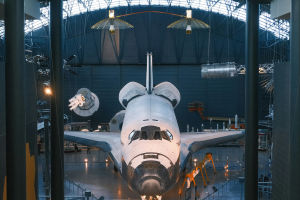 Space Shuttle DiscoveryHow Discovery changed space exploration and became a symbol of innovation
Copyright © zogu 2021 - 2025. All Right Reserved.