Beyond the Wag
Have you ever watched your dog wag its tail and immediately assumed it was happy? You're not alone—we've all done it. But what if we told you that a wagging tail doesn't always mean joy?
Today, let's explore what our dogs are really telling us with their tails and other subtle emotional signals. You may be surprised to learn how complex their emotional world truly is!
Tail Wagging Is a Language
Many of us grew up thinking tail wagging equals happiness. But researchers and dog behaviorists now tell us it's more like a form of communication—similar to how we use body language. According to Dr. Stanley Coren, a professor emeritus of psychology at the University of British Columbia and a canine expert, dogs use tail wagging to express a range of emotions, from excitement to nervousness to even aggression.
So the direction, speed, and height of a wag all matter. A tail wagging more to the right often indicates positive feelings, while wagging to the left could signal stress. The higher the tail, the more confident (or even dominant) the dog might feel. On the other hand, a low, slow wag could mean uncertainty or submission.
Why Direction and Speed Matter
We may think all tail wags look the same, but dogs are very attuned to these details. For example, rapid wagging with tense muscles could indicate alertness or even a potential warning. A slow, sweeping wag with relaxed body language is more likely to mean genuine happiness.
If we observe closely, we might notice that different breeds have different tail carriage styles, so it's important to know what's "normal" for our dog. For example, a Basenji has a naturally curled tail, while a Labrador's tail hangs straight. So a low tail on a Basenji may indicate sadness or discomfort, while the same posture on a Labrador might just be natural relaxation.
Beyond the Tail: Other Emotional Clues
Tail wagging is just one part of the bigger picture. Dogs use their whole body to express emotion—ears, eyes, posture, and even breathing patterns. When we combine these clues, we get a clearer idea of how our furry friends really feel.
For instance, a wagging tail paired with ears pinned back and a lowered body may signal fear. But a relaxed tail and loose body posture are signs of comfort. Eye contact also plays a role: soft eyes usually mean trust, while hard stares can mean the dog is uncomfortable or on guard.
Emotional Intelligence in Dogs
Dogs are not just reacting—they're thinking and feeling. Studies have shown that dogs can read human emotions and even mirror our stress. According to a 2019 study published in Scientific Reports, dogs living with stressed owners also showed increased levels of cortisol, a stress hormone. That's how emotionally connected they are to us!
This makes it even more important for us to be emotionally aware on their behalf. If our dog shows signs of anxiety, such as yawning, lip licking, or excessive tail wagging without other happy body language, we need to take it seriously.
When Wagging Goes Wrong
Unfortunately, misreading tail signals can lead to unsafe situations. A wagging tail doesn't always mean "come pet me." Many people, especially children, approach wagging dogs thinking they are friendly, only to get snapped at or scared. If the tail is high and stiff, with fast wagging and a rigid body, that could be a sign the dog is alert, not relaxed.
Veterinarians and dog trainers often warn us to look at the whole picture. If you're unsure about a dog's emotional state, it's safer to wait, watch, and give them space.
How We Can Respond Better
So, how can we be more emotionally tuned in to our dogs? First, let's practice observation. Watch how your dog reacts in different environments—at the vet, around other dogs, or when guests come over. Keep a mental note of their tail posture and how it matches their behavior.
Next, let's share what we learn with others. Many accidents involving dogs happen simply because people don't know what to look for. Educating children and even fellow dog lovers on canine body language can make a big difference.
Let's Talk!
Have you ever misread your dog's tail signals? Or maybe you noticed a time when a wag wasn't a happy one? We'd love to hear your stories—because the more we share, the better we all get at understanding our furry friends.
In the End, It's About Trust
Dogs give us unconditional loyalty. The least we can do is learn their language. By observing tail movement in context—with body, eyes, ears, and even breathing—we can get closer to truly knowing what they feel. And when we understand them better, our bond grows stronger.
Let's promise to look beyond the tail and into the heart. Because love, after all, is a two-way conversation—even if one side doesn't speak human.
-
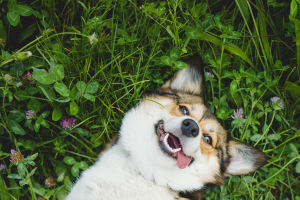 Tiny Legs, Big SecretCute or calculated? The truth behind Corgi legs might surprise you!
 -
 Raspberry Cream TartCan We Create The Perfect Raspberry Cream Tart At Home Step By Step With Simple Ingredients And Stunning Results?
 -
 Maldives in 5 DaysCan five days feel enough? With this plan, every day feels full and special!
Copyright © zogu 2021 - 2025. All Right Reserved.