Car History & Future
In 1886, Karl Benz filed a patent for a three-wheeled vehicle powered by a single-cylinder gasoline engine.
The Patent-Motorwagen traveled at roughly 10 miles per hour and required the driver to manage a fuel valve and brake lever simultaneously.
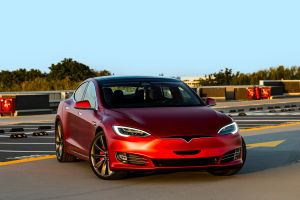
Today, a Tesla Model S can accelerate from 0 to 60 mph in under 2 seconds, parallel-park itself, and navigate a highway without the driver touching the wheel. That trajectory — from hand-cranked novelty to software-driven machine — spans about 140 years and encompasses some of the most consequential engineering decisions in human history.
The Foundation: Internal Combustion and the Assembly Line
The early decades of automotive history were dominated by two problems: how to make cars run and how to make them affordable. Karl Benz and Gottlieb Daimler addressed the first in the 1880s with practical gasoline-powered engines. Henry Ford addressed the second in 1913 with the moving assembly line at his Highland Park plant.
Before Ford's assembly line, building a single Model T took about 12.5 hours. After it, the time dropped to around 93 minutes. The price fell accordingly — from $825 in 1908 to under $300 by the mid-1920s. Car ownership went from a wealthy person's luxury to a middle-class expectation within a single generation.
The social consequences were enormous: cities expanded outward, suburban living became possible, and new industries, from roadside hotels to gas stations, emerged almost overnight.
Electric vehicles were actually among the earliest automobiles — the 1891 Flocken Elektrowagen appeared alongside early gasoline cars. They lost the competition for dominance, not because of inferior technology, but because of limited range and charging infrastructure compared to the expanding network of fuel stations. That limitation would define the industry for the next century.
Safety, Comfort, and the Mid-20th Century Transformation
The decades following the Second Global Conflict brought the automobile into its cultural peak in America and embedded it in every dimension of daily life. Automatic transmissions, power steering, and air conditioning transformed driving from an active mechanical task into a comfortable routine — the rise of the interstate highway system in the 1950s designed cities and commerce around car travel.
The 1960s and 1970s introduced the uncomfortable reckoning: cars were causing unprecedented levels of harm, and burning fuel was degrading air quality. Ralph Nader's 1965 book Unsafe at Any Speed forced a congressional response. Seat belts became mandatory. Crash testing became standard. The 1973 oil embargo then forced a parallel reckoning about fuel dependence and efficiency, accelerating research into alternatives that wouldn't produce meaningful results for another three decades.
By the 1980s and 1990s, computerization had entered the vehicle. Onboard diagnostics, electronic fuel injection, and anti-lock braking systems transformed the mechanical car into an integrated electronic system. A modern car contains between 50 and 150 electronic control units managing everything from throttle response to climate control.
The Rise of EVs and the Path to Autonomy
Tesla's launch of the Roadster in 2008 and the Model S in 2012 demonstrated that electric vehicles could be desirable, high-performance, and practical — not just compliance products built to meet regulations. The company's battery technology, over-the-air software updates, and Autopilot driver assistance system reset consumer expectations and forced every established automaker to accelerate electrification plans.
Government policy amplified the transition. Tax credits, emissions mandates, and investment in charging infrastructure in the U.S., Europe, and East Asia created economic conditions that made EV adoption increasingly rational for consumers. Norway, where over 90 percent of new car sales are electric, demonstrated that the transition can happen quickly given the right incentives.
Autonomous driving technology developed in parallel. The Society of Automotive Engineers classifies autonomy in five levels, from Level 1 — basic driver assistance — through Level 5, full autonomy requiring no human supervision. Most vehicles on the road today operate at Level 2, where the car can handle steering and speed but requires constant human attention.
Waymo's robotaxi service in a U.S. desert city and San Francisco operates at Level 4 — no driver required in defined geographic areas — and represents the current commercial frontier.
What Comes Next
Solid-state batteries, currently in development at companies including Toyota and QuantumScape, promise to replace lithium-ion chemistry with higher energy density, faster charging, and greater safety. Analysts expect commercial production to scale through the late 2020s, potentially extending EV range beyond 500 miles and cutting charge times to under 10 minutes.
The connected car continues to expand. Vehicle-to-vehicle (V2V) and vehicle-to-infrastructure (V2I) communication systems allow cars to share real-time data about road conditions, hazards, and traffic flow — building toward an integrated transport network rather than a collection of individually operated machines. The automobile's next century is shaping up to be as transformative as its first.
The car has changed more in the last 140 years than any other everyday machine. From hand-cranked engines to software that drives itself, each generation solved problems its predecessors couldn't yet imagine. Solid-state batteries, vehicle-to-vehicle communication, and full autonomy are not distant dreams – they are already in development.
The next decade will likely bring changes that make today's Teslas feel as outdated as a Model T. One thing is certain: the road ahead is still being paved, one innovation at a time.
-
 Comfort on WheelsA well-chosen pet stroller turns shared outings into gentle, confident moments again.
 -
 Curious Orb FishDiscover the Curious Orb Fish: The Strange Northern Sea Creature You’ve Never Seen Before!
 -
 Design by the DecadeCar designs are visual timestamps of their era. Here is how automotive styling evolved from 1886 to today.
Copyright © zogu 2021 - 2025. All Right Reserved.