EV vs Gas, Decided
The gap between electric vehicles and traditional gas cars has been narrowing for years across every meaningful dimension: purchase price, running costs, performance, and environmental impact.
In 2026, the comparison has shifted from "is an EV worth it?" to "for which specific situations is a gas car still the better call?" The answer to that second question is narrowing fast.
The Cost Math
Purchase price remains the most cited barrier to EV adoption, but the gap has closed considerably. In 2026, compact EVs carry a premium of roughly $3,000–$8,000 over comparable gas models before incentives. The federal tax credit of up to $7,500 under the Inflation Reduction Act, combined with state programs — California offers up to $7,000 additional — can close or eliminate that gap for qualifying buyers.
Where EVs win clearly is fuel cost. At national average gas prices of $3.20 per gallon and a gas car averaging 28 mpg, a driver covering 12,000 miles annually spends around $1,370 on fuel. The same distance in an EV at typical residential electricity rates costs roughly $580. That's about $790 in annual savings on fuel alone. Over a five-year ownership period, the gap widens further:
EVs also cost $600–$900 less per year in maintenance, because electric drivetrains have far fewer moving parts and don't require oil changes, transmission service, or exhaust system maintenance. Chris Harto, senior sustainability policy analyst, writes that real-world data shows electric vehicle owners are paying half as much as internal combustion engine owners to repair and maintain their vehicles.
Total cost of ownership typically reaches parity with gas vehicles within two to three years.
The Environmental Picture
The environmental case for EVs has become stronger as research has become more rigorous. A 2026 study published in PLOS Climate by researchers at Duke University found that during the first two years of operation, EVs produce roughly 30% higher CO₂ emissions than equivalent gas vehicles when full lifecycle factors are considered — primarily because of the energy-intensive process of mining lithium and manufacturing battery cells.
After two years of actual driving, however, EVs cross a breakeven point and begin steadily reducing cumulative emissions compared to gas cars.
Over a full vehicle lifetime, EVs produce approximately 65% lower carbon emissions than comparable internal combustion engine vehicles, according to data compiled across multiple lifecycle studies. A Tesla Model 3, on the average U.S. electricity grid, emits roughly 1.5 tons of CO₂ per year. A Toyota Camry emits approximately 4.6 tons — more than three times as much over the same miles driven.
The calculation improves over time as electricity grids decarbonize. The International Council on Clean Transportation projects that renewable energy will account for 86% of European electricity generation by 2045. Cars sold today typically remain on the road for 20 years, meaning EVs purchased now will become progressively cleaner throughout their operating life. Gas cars face no equivalent improvement pathway.
Infrastructure and Range Anxiety
The practical concern most often cited by potential EV buyers — getting stranded without a charge — has largely dissolved for most driving patterns.
The U.S. now has over 61,000 public charging stations and 168,000 charging ports. Tesla's decision to open its Supercharger network to other brands significantly expanded coverage. Most modern EVs offer ranges between 250 and 350 miles, comfortably exceeding the 95th percentile of daily driving needs.
Long-distance travel remains the one area where gas cars retain a meaningful practical advantage. Charging takes longer than refueling — even at DC fast chargers, a meaningful charge requires 20–45 minutes compared to five minutes at a gas station. For regular commuters and urban drivers, this is irrelevant. For people who regularly drive long distances without predictable charging access, it's still a real consideration.
Where Gas Cars Still Win
For buyers in rural areas with limited public charging, for people who can't charge at home (apartment dwellers without access to parking-integrated charging), and for those who regularly tow heavy loads over long distances, gas vehicles remain the more practical choice in 2026. Upfront cost is still a barrier in entry-level segments, where EVs haven't yet matched the pricing of the cheapest gas cars.
The direction of travel, however, is clear. Battery costs have dropped from $1,100 per kWh in 2010 to around $130 per kWh in 2026. EV sales grew 34% in Europe in January 2025, reaching 15% market share. As charging infrastructure expands and battery costs continue falling, the remaining practical cases for choosing a gas car will narrow year by year.
The math in 2026 is clearer than ever. For most drivers, EVs save money on fuel and maintenance, produce far lower lifetime carbon emissions, and offer enough range for daily needs. But gas cars still serve specific situations: rural areas, apartment dwellers without home charging, and frequent long-distance towers.
The gap keeps closing, but it hasn't closed completely. If you can charge at home and don't regularly drive 500 miles in a day, an EV likely saves you money starting year two. The rest is just waiting for infrastructure to catch up.
-
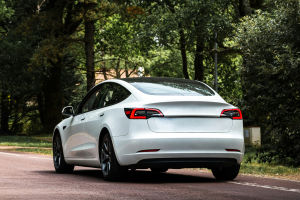 EVs & SustainabilityCars produce about 28% of global CO2. Here is what the automotive industry is actually doing to fix that.
 -
 Ennis, Storybook QuietRuins, river walks, limestone moonscapes—Ennis delivers soft adventure, big history, and easy day trips without the crowds.
 -
 Hair Color MatchingWhy Does Your Hair Color Change Your Entire Look? Discover Skin Tone Matching Secrets for a Naturally Bright Appearance!
Copyright © zogu 2021 - 2025. All Right Reserved.