Light and Plant Growth
Plants rely on light not only as an energy source but also as a signal that shapes growth, development, and metabolism.
While sunlight may appear uniform, it contains a spectrum of wavelengths—each influencing plants in unique ways.
Understanding how light spectra affect plant growth is crucial for optimizing crop yields, designing controlled environments, and exploring the subtle ways plants respond to their surroundings. This exploration delves into the science behind light quality and its profound effects on plant physiology.
The Role of Light in Photosynthesis
Photosynthesis is the cornerstone of plant energy production, powered primarily by light. Chlorophyll mainly absorbs blue and red light, converting it into chemical energy. Blue light promotes strong stems and compact leaves, while red light stimulates flowering and leaf expansion. Green light, often reflected rather than absorbed, penetrates deeper into leaf layers to support photosynthesis in lower canopy leaves. By tailoring light exposure to specific wavelengths, horticulturists can manipulate growth patterns and optimize biomass production.
Photoreceptors and Plant Development
Plants possess specialized photoreceptors that detect distinct wavelengths of light, guiding developmental processes. Phytochromes absorb red and far-red light, regulating germination, flowering, and shade avoidance. Cryptochromes and phototropins respond to blue and ultraviolet-A light, influencing leaf orientation, stomatal opening, and circadian rhythms. By understanding these signaling pathways, researchers can predict how changes in light spectra impact morphology, flowering time, and overall plant health.
Blue Light: Structure and Stress Response
Blue light plays a critical role in shaping plant architecture. Exposure to blue wavelengths results in shorter, sturdier stems and increased chlorophyll content, enhancing photosynthetic efficiency. Additionally, blue light triggers stress-response mechanisms, enabling plants to better cope with high-light or drought conditions. Controlled environments such as vertical farms or greenhouses often supplement blue light to improve compact growth and maintain plant resilience under artificial lighting.
Red Light: Growth and Reproduction
Red light is highly effective in stimulating cell elongation, leaf expansion, and flowering. Far-red light, a component of the red spectrum, interacts with phytochromes to signal shading conditions, prompting plants to elongate stems to outcompete neighboring vegetation. Strategic use of red and far-red light allows growers to regulate flowering cycles, optimize canopy structure, and balance vegetative and reproductive growth in crops.
Green Light: Penetrating and Supporting Growth
Although green light is less absorbed by chlorophyll, it penetrates deeper into the leaf canopy, enhancing photosynthesis in lower leaves. This wavelength is particularly valuable in dense crop settings where upper leaves can block sunlight. Recent research shows that green light can also influence stomatal behavior and photomorphogenesis, subtly shaping plant form and efficiency in ways previously underestimated.
Applications in Controlled Agriculture
Understanding light spectra has transformed modern agriculture. LED lighting systems allow precise control over wavelength composition, intensity, and duration, creating optimal conditions for plant growth in greenhouses and vertical farms. For example, blue-enriched light promotes compact, nutrient-rich lettuce, while red-dominant light can accelerate tomato flowering. By manipulating light spectra, growers enhance crop quality, reduce energy consumption, and adapt to spatial constraints.
Adaptive Strategies and Future Research
Plants continuously adapt to their light environment. By monitoring spectral changes, they adjust pigment production, leaf orientation, and metabolic activity. Future research focuses on fine-tuning spectral combinations for different species, exploring how ultraviolet and far-red wavelengths influence plant defense, and developing smart lighting systems that dynamically respond to plant signals. These innovations promise more sustainable, high-efficiency cultivation methods.
Conclusion: Harnessing the Spectrum
Light is far more than illumination; it is a sophisticated signal that orchestrates plant growth, development, and survival. Different wavelengths trigger unique responses in morphology, metabolism, and reproduction, revealing the nuanced ways plants interact with their environment. By understanding and applying knowledge of light spectra, scientists and growers can optimize crop performance, enhance sustainability, and unlock the hidden potential of plants. The study of light spectra exemplifies how precision and science converge to transform agriculture and deepen our appreciation of plant intelligence.
-
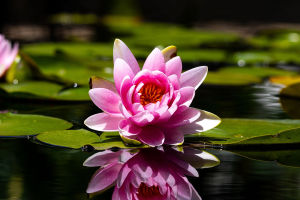 Lotus Rising Above MudHow Nelumbo nucifera grows from muddy waters into a symbol of calm, strength, and renewal.
 -
 A Season with the LotusHow Slow Observation of Nelumbo nucifera Transforms Time, Space, and Awareness
 -
 Cozy Life BlissDiscover the Hidden Joys of Everyday Clutter – Why Messy Homes Make Life Feel Truly Wonderful!
Copyright © zogu 2021 - 2025. All Right Reserved.