Ocelot Threat on Cozumel
Biologists on Cozumel, a Mexican island in the Caribbean, were stunned when their camera traps recently captured an ocelot (Leopardus pardalis), a wildcat considered endangered in much of its natural range.
What started as curiosity quickly became concern: ocelots are skilled predators, and Cozumel's endemic species have little to no natural defense against this medium-sized wildcat.
Luis-Bernardo Vásquez, head of the Urban Ecology Lab at El Colegio de la Frontera Sur-SLCL, has been studying Cozumel's wildlife for years. Using camera traps, transects, and road surveys, his team monitors the island's biodiversity. “Before 2016, we never detected any ocelots here,” Vásquez said. “Because we had extensive sampling before that time with no records, it seems the species was not present on the island.”
Endangered Elsewhere, Threat Here
Ocelots are declining across their natural range, from the southern United States to Uruguay. They are listed as endangered in the U.S., yet on Cozumel, they pose an ecological threat rather than a conservation opportunity.
The wildcat could threaten several endemic species, including:
1. Cozumel white-footed mouse (Peromyscus leucopus cozumelae)
2. Cozumel harvest mouse (Reithrodontomys spectabilis)
3. Cozumel rice rat (Oryzomys couesi cozumelae)
4. Dwarf peccary (Dicotyles tajacu nanus)
5. Cozumel curassow (Crax rubra griscomi)
David Will, of U.S.-based Island Conservation, emphasized the complex nature of this situation: “A species can be endangered in one place and ecologically damaging in another. Cozumel's ocelot illustrates how conservation isn't just about species—it's about values. The challenge isn't the cat itself, but balancing competing priorities in a changing world.”
How Did It Arrive?
Vásquez suspects human activity may have introduced the ocelot. “It could be an escapee or an animal released from captivity. In southern Mexico, wild felids are sometimes kept illegally as pets or used in tourism, which is one possible explanation.”
Although only a single ocelot has been detected, researchers are concerned that additional individuals could establish a breeding population. Other introduced predators, like margays (Leopardus wiedii) and boa constrictors, have already formed populations on Cozumel, posing ongoing threats to native species.
Conservation Challenges
Cozumel's ecosystem is fragile. Historically, the island had very few predators, so the introduction of new carnivores can disrupt ecological balance.
Vásquez explains: “Introducing an efficient predator into an ecosystem with vulnerable endemic species can create serious conservation problems. This is why continuous monitoring and preventing new introductions are essential for maintaining the island's biodiversity.”
Efforts to track and manage invasive species on Cozumel will require cooperation between researchers, local communities, and policymakers. Understanding how human activity contributes to species introduction is a critical step in preserving the island's unique wildlife.
Reflection
The Cozumel ocelot demonstrates that conservation is rarely straightforward. A species may be protected in one part of the world yet become a threat in another. Effective conservation depends not only on protecting individual species but also on carefully managing ecosystems and human impacts. The case of the ocelot underscores the importance of vigilance, proactive monitoring, and thoughtful ecological decision-making in a rapidly changing world.
-
 Your Perfect Fish TankHow to Choose the Right Tank for Healthy Fish and a Beautiful Home Display
 -
Your Perfect Fish TankHow to Choose the Right Tank for Healthy Fish and a Beautiful Home Display
-
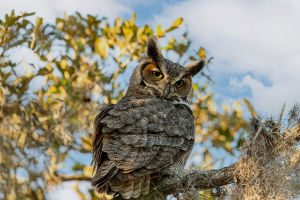 Great Horned Owl FactsDiscover the fascinating traits, hunting skills, and adaptability of this iconic bird of prey
Copyright © zogu 2021 - 2025. All Right Reserved.