Astronaut Training Path
Becoming an astronaut is a dream for many, yet it demands far more than ambition.
The journey from initial selection to actually traveling to space is intense, challenging, and highly selective. Every step is designed to prepare candidates for the physical, mental, and technical demands of life beyond Earth.
Selection and Eligibility
The first stage in becoming an astronaut is a rigorous selection process. Candidates typically have advanced degrees in science, engineering, or medicine, alongside substantial professional experience. Physical fitness, psychological stability, and problem-solving abilities are tested extensively. Only a small fraction of applicants advance, as agencies seek individuals capable of performing under extreme conditions while maintaining teamwork and composure.
Basic and Advanced Training
Once selected, astronauts undergo a series of training programs. Basic training covers spacecraft systems, orbital mechanics, and safety protocols. Candidates learn how to operate spacecraft, manage emergencies, and perform repairs in confined and zero-gravity environments. Advanced training includes simulations of long-duration missions, complex scientific experiments, and navigation in both simulated and real microgravity conditions. This stage ensures astronauts can respond effectively to unexpected challenges during actual missions.
Physical and Mental Conditioning
Physical resilience is crucial. Astronauts engage in cardiovascular training, strength exercises, and endurance tests to adapt to high-stress and microgravity environments. Mental preparation is equally vital; they practice stress management, decision-making under pressure, and team collaboration exercises. Isolation simulations, where candidates live in confined spaces for extended periods, help build psychological endurance and problem-solving skills crucial for space travel.
Specialized Skill Development
Beyond general training, astronauts acquire specialized skills tailored to their mission. Pilots practice spacecraft maneuvering, scientists refine laboratory procedures in microgravity, and engineers focus on maintaining complex systems in orbit. Extravehicular activity (EVA) training, conducted in underwater neutral-buoyancy labs, prepares astronauts for spacewalks, teaching them precise movements while wearing bulky suits. Language training is also common for international collaboration aboard space stations.
Practical Preparation for Missions
Before launch, astronauts participate in mission-specific exercises, including rehearsals of daily routines, emergency drills, and simulated experiments. They familiarize themselves with spacecraft layouts, scientific equipment, and communication protocols. Briefings and team discussions reinforce problem-solving strategies and coordination among crew members, ensuring readiness for every eventuality.
Reflection on the Journey
Becoming an astronaut is not merely a career choice; it is a transformation of mind, body, and spirit. The journey from selection to spaceflight teaches resilience, teamwork, and adaptability. It demonstrates how human determination and meticulous preparation allow individuals to explore the unknown and contribute to our understanding of the universe. Reflecting on this path reminds us that reaching extraordinary heights often begins with extraordinary dedication on Earth.
-
 First Human in SpaceExplore how one mission changed humanity’s view of the universe forever
 -
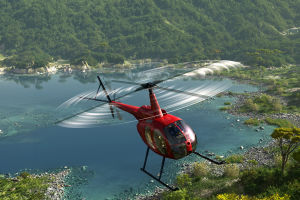 Air Lift TechHow can a helicopter hover, rise vertically, and move freely in the sky without a runway? The simple science explained!
 -
 Air Rescue PowerAbove the Obstacles: Why Aerial Support is the Backbone of Modern Rescue
Copyright © zogu 2021 - 2025. All Right Reserved.