AI: The Safer Driver
Road traffic accidents remain a leading cause of injury and death worldwide. Approximately 1.19 million people die in traffic accidents each year, with an additional 20 to 50 million sustaining non-fatal injuries.
The economic cost of road accidents is significant, often equaling 3% of GDP in many countries. Research indicates that the vast majority of serious crashes are attributed to human error, including distraction, fatigue, impairment, and poor judgment.
Artificial intelligence (AI) is emerging as a powerful solution to this global problem. Unlike human drivers, AI doesn’t get distracted, tired, or impaired, and it can process vast amounts of sensor data faster than human reflexes allow. This capability forms the foundation of a revolution in automotive safety.
How AI Enhances Vehicle Safety
Learning Beyond Rules
Traditional safety systems operate on fixed rules — for example, applying brakes when the distance to the car ahead falls below a threshold. These systems struggle in scenarios that fall outside their programming, such as driving in partial fog or detecting a pedestrian partially obscured by a parked vehicle. AI-based systems, by contrast, learn from large datasets of real-world driving scenarios, enabling them to generalize to new and unexpected conditions, improving both reliability and safety.
The core technology enabling this is deep learning, particularly Convolutional Neural Networks (CNNs). CNNs process camera and sensor data in layers, identifying edges, shapes, and objects to recognize pedestrians, vehicles, lane markers, and other critical elements in real time. Sensor fusion techniques combine vision data with LiDAR and radar processed through probabilistic filters, ensuring robust performance in poor lighting, rain, or partial obstructions.
Collision Avoidance and Automatic Emergency Braking
Automatic Emergency Braking (AEB) is one of the most widely deployed AI safety technologies. Using cameras, radar, and LiDAR, AEB continuously monitors the road ahead, calculates closing speed and distance, and automatically applies brakes when a collision is imminent. AEB equipped with low-speed operation significantly reduces rear-end collisions, while broader collision avoidance systems — detecting lateral and intersection hazards — reduce overall collision risk.
Adaptive Cruise Control (ACC) builds on these capabilities, dynamically maintaining a safe following distance and adjusting speed in real time based on road conditions and the behavior of vehicles ahead. For example, stopping at 100 km/h on dry asphalt requires over 60 meters, and over 95 meters in wet conditions. ACC continuously recalculates braking needs to prevent collisions.
Driver Monitoring Systems
AI also improves safety by monitoring the driver. Driver monitoring systems use cameras and computer vision algorithms to track eye movement, head position, blink rate, and gaze direction. These systems detect signs of distraction or drowsiness, issuing escalating alerts when needed.
Integration with Natural Language Processing (NLP) allows voice commands, reducing the risk of distraction from in-car infotainment systems. By keeping hands on the wheel and eyes on the road, AI reduces human error while enhancing overall convenience.
Predictive Maintenance
AI extends its safety benefits beyond active driving. Predictive maintenance systems monitor sensor data from brake wear indicators, tire pressure sensors, engine performance metrics, and battery health monitors. By identifying early signs of component failure, these systems prevent accidents before they occur.
Unlike traditional maintenance schedules, which rely on fixed intervals, AI-driven maintenance alerts drivers and fleet managers when service is actually required, optimizing safety and cost. For commercial fleets, preventing just one major accident can offset the cost of system installation.
Post-Crash Response
After an accident, AI-powered systems can automatically contact emergency services and transmit critical vehicle data — including location, speed, direction of impact, and crash severity — to first responders. This rapid information transfer improves emergency response times and aids insurance processing and liability determination, particularly as autonomous systems take on increasing driving responsibility.
Artificial intelligence is redefining road safety by reducing human error, predicting failures, and enabling faster emergency responses. From collision avoidance to driver monitoring and predictive maintenance, AI enhances every aspect of driving safety. As these technologies become increasingly widespread, they promise a future in which driving is safer, more reliable, and less dependent on human judgment — a critical step toward preventing millions of accidents worldwide.
-
 Kahului: Start HereBeyond arrivals, Kahului anchors beach dips, ridge trails, and Hana curves—planned smart so days feel free, not frantic.
 -
 Save a Wilting PlantYour houseplant isn't dead yet — these simple fixes can bring it back before it's too late
 -
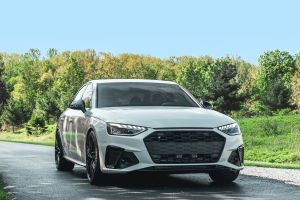 Car History & FutureOne invention, 140 years, and a complete reinvention happening right now. Here is the full story of the automobile.
Copyright © zogu 2021 - 2025. All Right Reserved.